

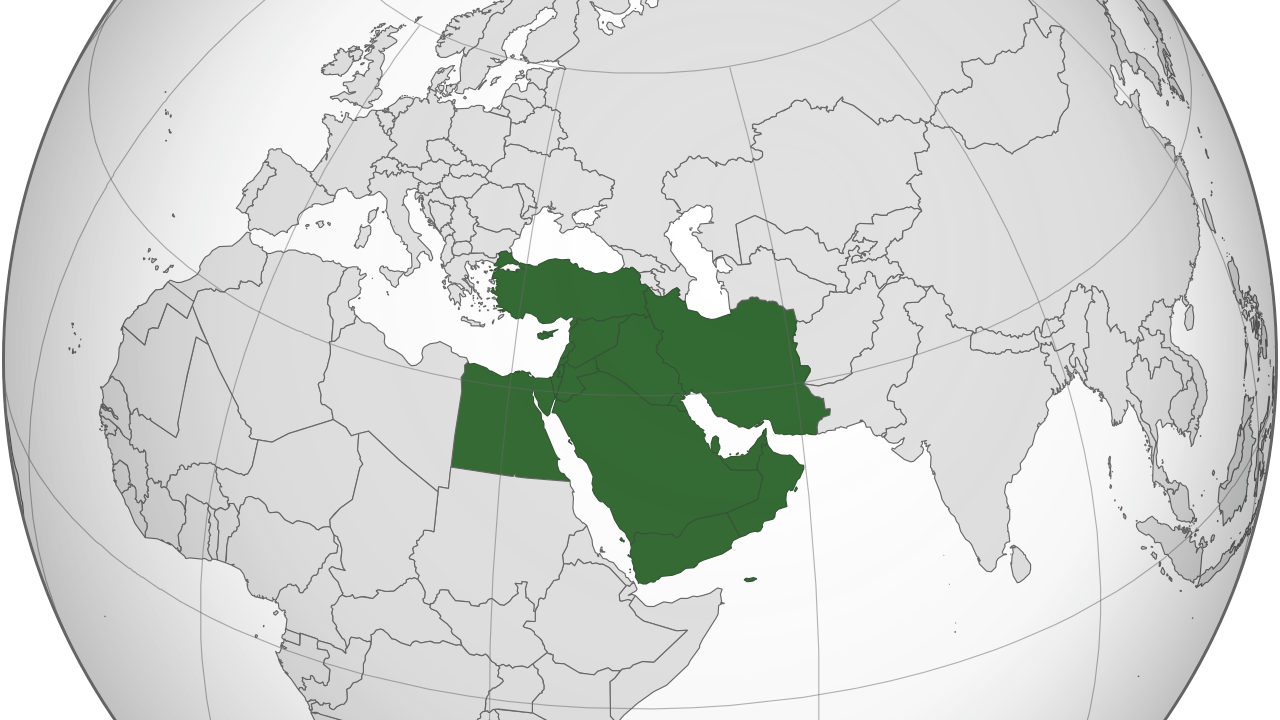
In this edition of Critical Thinking, Peter Hütte addresses the impact of the conflict in Iran on the critical minerals sector. As Peter writes, in the years before the war, the Gulf states had been quietly positioning themselves as a crucial node in the critical minerals supply chain. The war has put that role at risk.
From a critical minerals standpoint, the dominant narrative of the US/Israel war with Iran focuses on two dimensions: China’s strengthened leverage over the inputs the US needs to rebuild its depleted weapons systems, and the disruption to chemical supply chains – particularly sulfuric acid and helium derived from Gulf refinery byproducts – that constrain mineral processing well beyond the conflict zone.
Both matter. But they obscure a less visible setback: in the years before the war, Gulf states had been quietly positioning themselves as a central node in the global minerals supply chain, deploying sovereign capital, investing in processing capacity, and leveraging logistics infrastructure to offer a non-Chinese alternative. The war has put that role at risk.
An Emerging Counterweight
In recent years, the UAE, Qatar, and Saudi Arabia have been staking out increasingly active positions across the minerals value chain – building the infrastructure that connects mineral supply chains to global markets while positioning themselves as processing hubs in their own right. While Africa has been a primary source of raw material, the Gulf states’ ambitions extend well beyond the continent.
Over the past decade, UAE state-linked vehicles have spent billions of dollars acquiring mining rights across Africa, complemented by large-scale development aid and investment in domestic processing capacity. Dubai had already established itself as the world’s second-largest gold trading center, handling an estimated 25 percent of global trade. Qatar’s sovereign wealth fund took equity positions in Glencore, Ivanhoe Mines, and TechMet, while Qatar Airways’ expanding African network positioned Doha as a logistics node connecting mineral supply chains to global markets. And Saudi Arabia designated mining as a central pillar of its Vision 2030 diversification initiative, setting out to increase the sector’s contribution to GDP from US$17 billion to US$75 billion by 2035, with state-backed Maaden pledging US$15 billion in global mining investments over the coming years.
These efforts have drawn significant Western capital. In October 2025, the US Development Finance Corporation (DFC), Abu Dhabi’s ADQ, and US-based Orion Resource Partners launched the Orion Critical Mineral Consortium, with US$1.8 billion in committed capital and a target of growing to US$5 billion. In February 2026, days before the war began, the consortium signed an MoU with Glencore for a proposed US$9 billion transaction to acquire a 40-percent stake in two of the DRC’s largest copper-cobalt assets. At the project level, foreign companies were beginning to treat the Gulf as a viable processing destination: For example, Australia-based EV Metals Group is developing a lithium chemicals hub in Saudi Arabia, while Canada’s Northern Graphite announced in January 2026 to build a US$200 million battery anode materials plant in the Kingdom.
Infrastructure Struck, Confidence Shaken
Together, these moves represented a nascent but real alternative to Chinese dominance – backed by sovereign capital, diplomatic reach, and geographic proximity to Africa’s most mineral-rich regions. The war has damaged that positioning. Iranian strikes on Gulf smelting operations, including Emirates Global Aluminium and Aluminium Bahrain, have affected an estimated 3 million metric tons of combined annual capacity, with restarts expected to take months if not years. Qatar’s Ras Laffan gas facility – the source of roughly a third of global helium supply – declared force majeure following missile and drone strikes in March. These are not marginal assets. They represent decades of capital investment running into the tens of billions of dollars, and they are integral to the supply chains of everything from semiconductors to EV batteries.
The deeper problem is not the immediate damage, but what the war has revealed about the vulnerability of critical processing infrastructure to regional conflict. Long-term capital commitments – the kind required to build a refinery, a minerals processing hub, or a logistics corridor – depend on confidence in physical security. That confidence is now harder to establish. Investors who might have backed Gulf-based processing projects as an alternative to China must now price in a risk that was previously treated as remote.
The fiscal fallout compounds the problem: Macroeconomic research consultancy Capital Economics projects GDP contractions this year of roughly 13 percent for Qatar, 8 percent for the UAE, and 6.6 percent for Saudi Arabia. The sovereign capital that was earmarked for mining and minerals processing is now competing with reconstruction and fiscal stabilization. These programs are unlikely to be abandoned, but the pace and ambition of future commitments will be harder to sustain. The broader processing hub ambitions – Saudi Arabia’s mine-to-magnet supply chain, the UAE’s lithium refining buildout, the Gulf’s role as a connective layer between African ore and global markets – all require sustained long-term capital deployment of the kind that becomes harder to justify when sovereign balance sheets are under strain and reconstruction and defense competes for the same pools of funding.
There is also a less quantifiable risk. The Gulf states spent a decade attracting the expatriate talent and institutional expertise that underpins their ambitions in finance, logistics, and now minerals. If the war erodes the financial largesse and perceived stability that drew that talent in the first place, the Gulf’s capacity to execute on its minerals agenda will be harder to rebuild than a balance sheet.
The conflict is not over, and its full impact on Gulf industrial and financial capacity remains uncertain. A breakdown of the current ceasefire – or strikes on additional critical infrastructure – would deepen every dimension of the setback described here.
What This Means
The Gulf states were never going to displace China in the minerals supply chain. But they represented something valuable: a set of actors with the capital, geography, and political motivation to build processing and logistics capacity outside Beijing’s orbit. Washington had recognized this, encouraging Gulf investment in critical minerals as a complement to its own resilience agenda. In practice, that meant looking in particular to the UAE’s expanding footprint in Africa – especially in and around the Copperbelt – while also viewing Gulf capital more broadly as a potential counterweight to Chinese dominance across strategic mineral supply chains. The war has not eliminated that potential, but it has set it back at a moment when the broader resilience agenda can least afford the delay.
For companies operating across critical mineral supply chains, the practical implication is that some of the non-Chinese processing and logistics options that appeared to be materializing in the Gulf will take longer to come online than anticipated. The question worth watching is whether the war ultimately accelerates investment in genuinely dispersed processing capacity elsewhere – in Australia, Canada, Southeast Asia or parts of Africa itself – or simply deepens the default reliance on Chinese infrastructure that the Gulf build-out was meant to reduce.